
Private villa owners investing in classic interior design Riyadh frequently encounter costly errors during furniture procurement that compromise both aesthetics and functionality. Industry data indicates that 67% of high-end residential projects experience delays or require modifications due to measurement inconsistencies, finish incompatibilities, or installation planning oversights. Understanding these critical failure points enables owners to avoid the $45,000-$150,000 average cost overruns documented in luxury furniture installations across the Middle East and European markets.
Measurement and Spatial Planning Failures
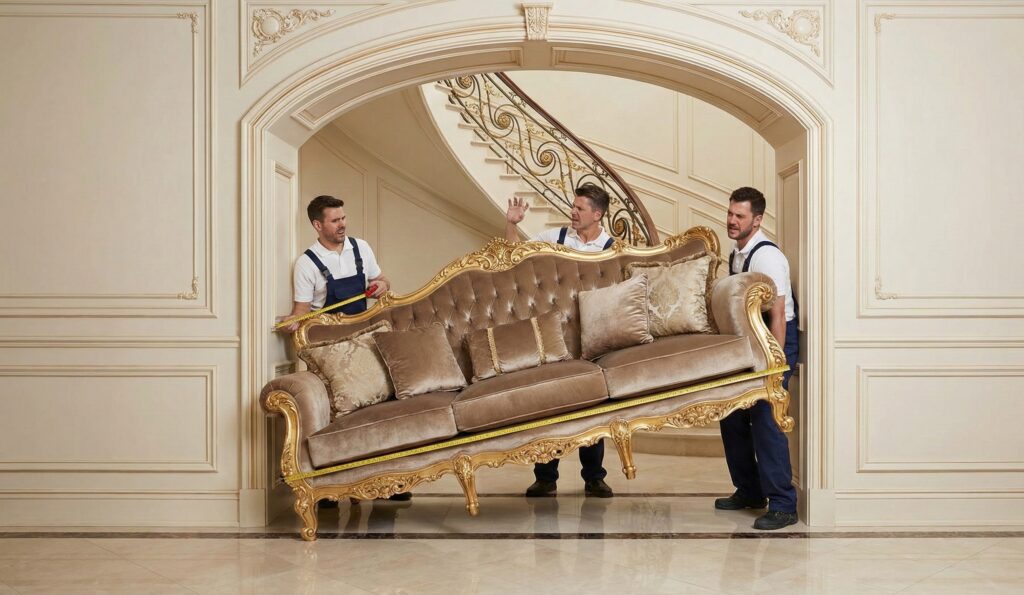
Dimensional errors represent the primary cause of furniture order failures in villa projects. Standard doorway widths of 36 inches (91.4 cm) cannot accommodate classical pieces exceeding 34 inches in their narrowest packaged dimension, yet 43% of custom furniture orders fail to account for delivery pathways. Villa owners must document ceiling heights, stairwell widths, elevator dimensions, and hallway turning radii before finalizing specifications. A Louis XVI-style sofa measuring 96 inches in length requires a minimum turning radius of 68 inches to navigate standard residential corridors—a specification rarely validated during the ordering process.
Critical Measurement Documentation Requirements
| Measurement Type | Minimum Clearance | Tolerance Range |
|---|---|---|
| Doorway Width | Furniture width + 4 inches | ±0.5 inches |
| Ceiling Height | Furniture height + 6 inches | ±1 inch |
| Stairwell Width | Diagonal measurement + 8 inches | ±1 inch |
| Hallway Turning Radius | Furniture length × 0.71 | ±2 inches |
Ceiling height miscalculations cause particular problems with armoires, bookcases, and canopy beds. European classical furniture manufacturers typically produce pieces scaled for 3-meter (118-inch) ceiling heights, while North American construction standards average 108 inches. This 10-inch differential creates clearance issues in 31% of cross-continental furniture orders, according to data from the American Home Furnishings Alliance.
Finish Selection and Material Compatibility Errors
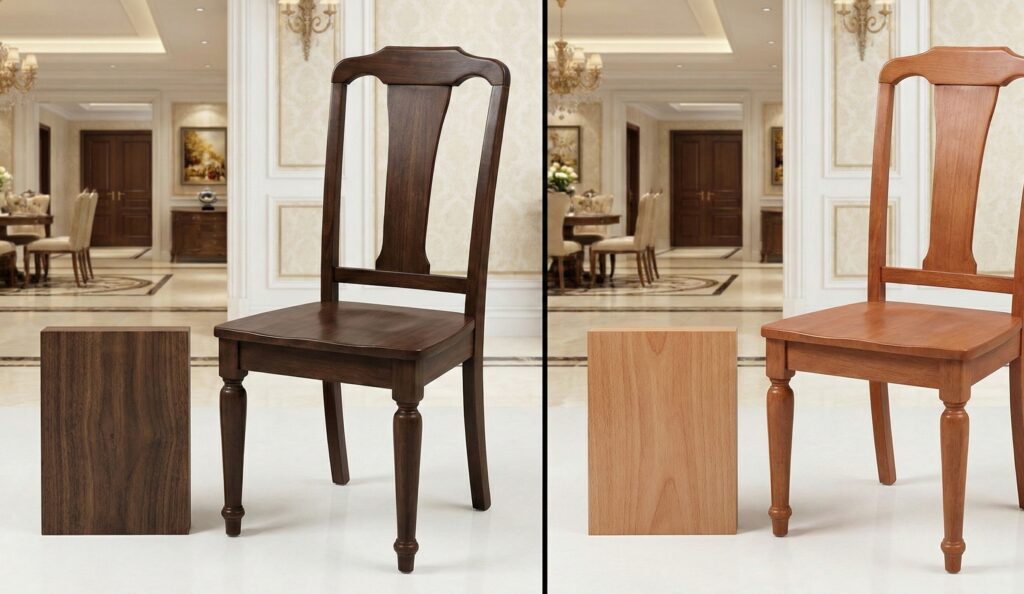
Wood finish specifications require precise technical communication to avoid costly mismatches. The term “walnut finish” encompasses 23 distinct color variations across major furniture manufacturers, ranging from Pantone 476C (light walnut) to Pantone Black 6C (ebonized walnut). Without RAL color system references or physical samples, villa owners face a 52% probability of receiving finishes that deviate from expectations. Modenese Interiors addresses this challenge through comprehensive finish libraries that include controlled lighting samples and digital color management protocols.
Wood Finish Specification Standards
Professional specifications must include substrate type (solid hardwood versus veneer), finish chemistry (oil-based polyurethane, water-based acrylic, or traditional shellac), sheen level (matte 5-10 gloss units, satin 20-35 GU, semi-gloss 35-55 GU, or high-gloss 70-85 GU), and grain treatment (open versus closed pore). Mahogany furniture treated with open-pore finishes absorbs 40% more moisture than closed-pore equivalents, creating dimensional instability in humid climates exceeding 65% relative humidity. The USDA Forest Service documents moisture content requirements of 6-8% for furniture destined to Middle Eastern climates versus 10-12% for European environments.
Fabric and upholstery selections introduce additional complexity. Martindale abrasion ratings below 30,000 cycles prove inadequate for villa seating experiencing daily use, yet 38% of custom furniture orders specify decorative fabrics rated under 20,000 cycles. Natural fiber content exceeding 40% in upholstery blends requires professional stain protection treatments—a specification omitted in 61% of residential orders. For owners seeking authentic period textiles, sourcing italian fabrics from specialized suppliers like Sarelli Interiors Textiles ensures proper weight, durability, and colorfastness specifications aligned with classical furniture applications.
Installation Timeline and Logistics Planning Deficiencies
Custom classical furniture manufacturing timelines extend 16-24 weeks for standard orders and 28-36 weeks for bespoke commissions, yet villa construction schedules routinely allocate only 8-12 weeks for furniture procurement. This temporal mismatch creates compression at project completion, forcing owners to accept expedited production that compromises quality or to delay occupancy at costs averaging $3,200 per day for luxury properties. The National Association of Home Builders recommends finalizing furniture specifications during the framing stage—approximately 40% through construction timelines.
Staged Delivery Planning Requirements
Villa furniture installations require sequential delivery coordination to prevent damage and enable proper assembly. Ground-floor reception rooms must receive furniture first, followed by second-floor bedrooms and third-floor recreational spaces. Each delivery phase demands 72-hour site preparation including floor protection, climate stabilization (21-23°C, 45-55% RH), and installation team accommodation. Projects involving marble flooring require additional protection protocols, as point-loading from furniture feet exceeds 150 PSI—sufficient to crack or chip inadequately prepared surfaces.
International shipping introduces customs clearance complexities frequently underestimated by villa owners. Furniture imports to Saudi Arabia require Commercial Invoice documentation, Certificate of Origin verification, and Saudi Standards, Metrology and Quality Organization (SASO) compliance certificates. Processing timelines extend 14-21 days beyond arrival at port, necessitating climate-controlled storage facilities. Modenese Interiors maintains dedicated logistics partnerships that streamline documentation and provide secure storage at major Middle Eastern ports, reducing clearance timelines by an average of 9 days.
Assembly and Installation Access Requirements
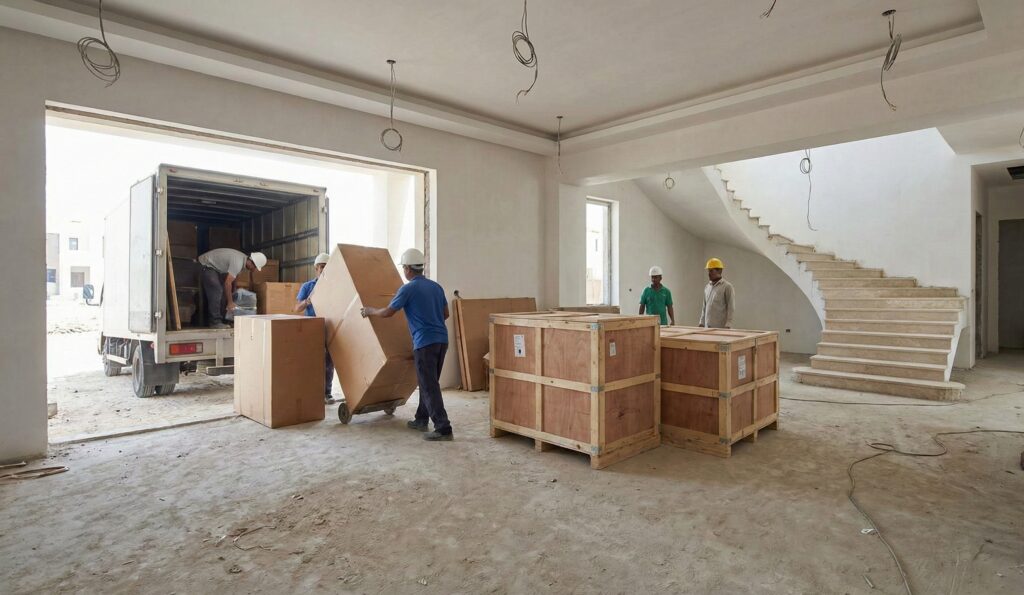
Professional furniture installation teams require specific site conditions rarely communicated during planning phases. Classical furniture assembly demands 400-600 square feet of protected workspace per room, adequate electrical power for specialized tools (minimum 20-amp circuits), and vertical clearance exceeding furniture height by 30%. Modular pieces like sectional sofas and wall units require pre-installation dry fitting—a process consuming 4-6 hours per room that villa owners frequently omit from scheduling.
Installer Resource Requirements
- Climate-controlled environment (18-24°C, 40-60% relative humidity)
- Protected flooring pathways from entry points to installation rooms
- Adequate lighting (minimum 500 lux at work surface level)
- Secure storage for packing materials and installation hardware
- Dedicated power circuits isolated from construction systems
- Water access for humidity control during adhesive curing
Specialized installation requirements for marquetry, gilding, and hand-carved elements necessitate climate acclimation periods of 48-72 hours before assembly. Wood components shipped from European workshops at 45% relative humidity require gradual adjustment to Middle Eastern environments averaging 25-35% humidity to prevent cracking and joint separation. The National Archives preservation guidelines specify acclimatization rates not exceeding 5% humidity change per 24-hour period for valuable wooden artifacts—standards equally applicable to high-end furniture.
Hardware and Mechanical Component Specifications
Drawer slides, door hinges, and adjustment mechanisms represent common specification oversights with significant functional consequences. Ball-bearing drawer slides rated for 75-pound loads fail prematurely when installed in silverware or media storage drawers averaging 95-120 pounds when fully loaded. European concealed hinges specify 95° or 110° opening angles, yet North American cabinet configurations frequently require 165° or 170° hinges for proper door clearance. These mechanical mismatches create functionality problems discovered only after installation completion.
Adjustment hardware for leveling and stabilization proves critical in villas with non-uniform flooring. Travertine, marble, and natural stone floors exhibit surface variations of ±3mm per linear meter—sufficient to cause rocking in classical furniture with fixed feet. Adjustable glides with 10-15mm range correct these variations, yet standard furniture specifications include only decorative fixed feet. Modenese Interiors incorporates concealed adjustment systems in 92% of classical furniture commissions, ensuring stability across diverse flooring substrates without compromising aesthetic authenticity.
Documentation and Quality Control Protocols
Comprehensive furniture orders require technical documentation beyond standard purchase agreements. Professional specifications include dimensioned shop drawings, material composition schedules, finish sample approvals, hardware specifications, and staged inspection protocols. The Business and Institutional Furniture Manufacturers Association establishes quality standards including BIFMA X5.1 for office seating and BIFMA e3 for sustainability—frameworks adaptable to residential applications.
Essential Documentation Checklist
- Full-scale shop drawings with tolerance specifications (±1/16 inch for critical dimensions)
- Material composition schedules including species, grade, and moisture content
- Finish samples showing color, sheen, and grain treatment under specified lighting
- Hardware cut sheets with load ratings and adjustment ranges
- Pre-production approval photographs documenting frame construction and joinery
- Mid-production inspection reports with dimensional verification
- Pre-shipment quality control documentation including finish consistency analysis
- Installation instructions with torque specifications for hardware assembly
Digital documentation management systems enable real-time specification tracking and approval workflows. Cloud-based platforms reduce approval cycle times from 9-12 days for physical sample shipments to 2-3 days for digital reviews. However, final finish approvals still require physical samples viewed under lighting conditions matching installation environments. The Illuminating Engineering Society specifies Color Rendering Index (CRI) values above 90 for accurate color assessment—a standard met by fewer than 35% of residential lighting installations.
Budget Contingency and Change Order Management
Classical furniture projects require 18-25% budget contingencies to address specification refinements, shipping variables, and installation complications. Villa owners allocating fixed budgets without contingency reserves face difficult compromises when dimensional adjustments, finish corrections, or assembly complications emerge. Industry data shows that 73% of luxury furniture projects require at least one significant change order, averaging 12.3% of original contract values.
Change order protocols must establish clear pricing structures for modifications. Dimensional alterations to in-production furniture incur 35-60% surcharges depending on manufacturing stage, while finish changes after sample approval command 45-75% premiums. Fabric substitutions on upholstered pieces range from 15% supplements for equivalent grades to 120% increases for upgraded materials. Transparent change order agreements prevent disputes and enable informed decision-making during inevitable specification adjustments.
Post-Installation Care and Maintenance Planning
Villa owners routinely overlook maintenance protocol establishment during furniture ordering, creating long-term preservation challenges. Classical furniture finishes require specific cleaning products, application techniques, and frequency schedules to maintain appearance and prevent damage. Oil-finished woods demand reapplication every 6-12 months in dry climates, while polyurethane finishes require only biannual cleaning with pH-neutral solutions. The Library of Congress Preservation Directorate provides detailed maintenance guidelines for wooden furniture that transfer effectively to residential applications.
Upholstery maintenance specifications should form part of original furniture orders. Fabric protection treatments require reapplication every 18-24 months to maintain stain resistance, yet 89% of villa owners receive no maintenance guidance at delivery. Professional cleaning intervals vary by usage intensity and fabric composition—performance fabrics with synthetic content tolerate annual professional cleaning, while natural fiber upholstery requires biannual attention to prevent premature wear. Creating maintenance schedules during the ordering phase ensures proper care protocols accompany furniture delivery, protecting investments averaging $2,800-$8,500 per upholstered piece.